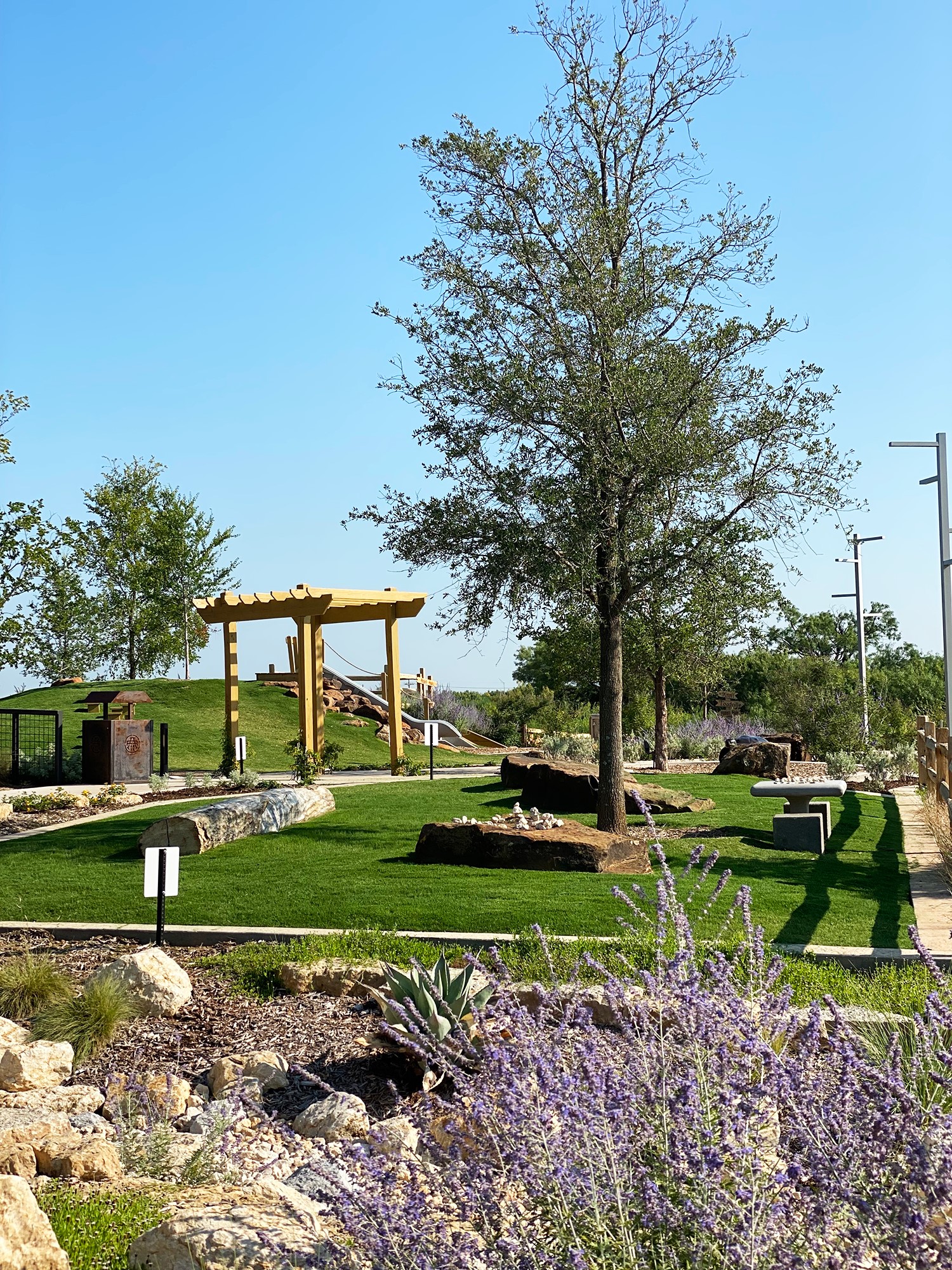
My yard looks great! I am very happy with MasterScapes! It has definitely been a happy marriage so far!
Here’s a question every Texas homeowner eventually faces: “What kind of grass do I actually have, and is it the right one for my yard?”
Maybe you just moved into a new home and inherited someone else’s lawn choices. Maybe your current grass is struggling, and you’re wondering if there’s a better option. Or perhaps you’re starting from scratch and staring at bare dirt, trying to figure out which grass will give you that lush, green lawn you’re envisioning without requiring a second mortgage to maintain.
Here’s the truth: choosing the right grass for your Texas lawn is one of the most important landscaping decisions you’ll make. Get it right, and you’ll have a beautiful, resilient lawn that handles our climate with minimal fuss. Get it wrong, and you’ll spend years fighting a losing battle, watching your grass struggle through summers, thin out in shaded areas, or simply refuse to thrive no matter how much water and fertilizer you throw at it.
At MasterScapes, we’ve been installing and maintaining lawns across Abilene, Dallas/Fort Worth and Wichita Falls area since 1992. Over those three decades, we’ve learned exactly which grasses perform best in North Texas, which ones are worth the investment, and which ones cause more headaches than they’re worth.
This guide will walk you through the most popular grass types in Texas, help you understand which one is right for your specific situation, and give you the knowledge to make an informed decision or at least know what questions to ask when you call us for a consultation.
Before we dive into specific grass types, you need to understand one fundamental distinction: warm-season versus cool-season grasses.
Warm-season grasses thrive in hot weather, actively growing when temperatures are between 80-95°F. They go dormant (turn brown) when temperatures consistently drop below 50-55°F in fall and don’t green up again until spring when soil temperatures reach about 65°F. In Texas, warm-season grasses are the dominant choice because they’re built for our climate.
Cool-season grasses prefer temperatures between 60-75°F, stay green through winter, and struggle (sometimes fatally) in extreme summer heat. They’re less common in Texas but have a place in specific situations, particularly in shadier landscapes.
For most North Texas homeowners, warm-season grasses are the right choice. Let’s explore your options.
If you live in Texas, there’s a good chance you either have Bermuda grass or your neighbor does. It’s the most common lawn grass in our state, and for good reason it’s tough, heat-loving, and thrives on conditions that would stress other grasses.
Bermuda grass (Cynodon dactylon) is a warm-season perennial that spreads aggressively through both above-ground runners (stolons) and below-ground runners (rhizomes). This growth habit means it can repair itself when damaged, fill in bare spots, and create a dense, durable lawn that handles foot traffic beautifully.
Key Characteristics:
Not all Bermuda is created equal. There are several varieties, each with different characteristics:
Common Bermuda is what most people have; it’s inexpensive, tough, and grows from seed. It has a coarser texture than hybrid varieties but is extremely durable.
Hybrid Bermuda varieties (like Tifway 419, TifTuf, and Celebration) offer finer texture, better color, improved drought tolerance, and denser growth. These are typically installed as sod rather than seed and cost more initially but provide superior results.
According to Texas A&M AgriLife Extension, Bermuda grass performs best in areas receiving at least 6-8 hours of direct sunlight daily and is the top choice for athletic fields and high-use areas due to its durability and recovery rate.
If Bermuda is the Texas workhorse, St. Augustine is the luxury sedan; it looks plush, feels soft underfoot, and performs better in situations where Bermuda struggles, particularly shade.
St. Augustine grass (Stenotaphrum secundatum) creates a thick, carpet-like lawn with broad, flat blades. It spreads through stolons (above-ground runners) and establishes quickly when installed as sod. Many homeowners describe a well-maintained St. Augustine’s lawn as feeling like walking on carpet hence the nickname “carpet grass.”
Key Characteristics:
Several varieties offer different characteristics:
Raleigh is a popular cold-hardy variety that performs well in North Texas, tolerating our occasional hard freezes better than some other varieties.
Palmetto offers improved cold tolerance and a finer texture than standard St. Augustine.
Floratam is more common in South Texas due to its chinch bug resistance but is less cold-hardy than Raleigh.
St. Augustine has a reputation for being “high-maintenance,” but this is often due to improper care. The biggest mistake homeowners make is over-fertilizing St. Augustine, which makes it more susceptible to disease. It also requires mowing at the correct height (2.5-3.5 inches) cutting it too short stresses the grass and opens the door for weeds and disease.
If Bermuda is too aggressive and St. Augustine is too fussy, Zoysia might be your “just right” grass. It’s been called the “Goldilocks grass” because it sits comfortably between Bermuda and St. Augustine in almost every characteristic.
Zoysia grass (Zoysia spp.) has been gaining market share in Texas over the past decade as homeowners discover its balanced characteristics. It creates a dense, attractive lawn that handles both sun and moderate shade, tolerates drought well, and requires less mowing than Bermuda.
Key Characteristics:
Emerald offers fine texture and deep green color but is less cold-hardy than some other varieties.
Palisades is one of the most common varieties in Texas, offering good cold tolerance and wear resistance.
Zeon provides exceptional density and fine texture with good shade tolerance.
For homeowners interested in low-water, low-maintenance lawns with a more natural aesthetic, Buffalo grass deserves consideration.
Buffalo grass (Bouteloua dactyloides) is native to the Great Plains and is the only native grass that makes a viable lawn in Texas. It evolved in our climate and soil, which means it’s naturally adapted to our conditions.
Key Characteristics:
Buffalo grass works beautifully for the right homeowner and situation, but it requires adjusting expectations about what a “lawn” looks like.
While most Texas lawns use warm-season grasses, tall fescue has a niche, particularly in shadier landscapes or for homeowners who prefer year-round green lawns.
Tall fescue (Festuca arundinacea) is a cool-season grass that stays green through winter when warm-season grasses are dormant. Modern turf-type tall fescue varieties have improved significantly over old pasture-type fescue.
Key Characteristics:
Tall fescue is less common in North Texas than in northern states, but it has a place in specific situations, particularly in heavily shaded areas where warm-season grasses have repeatedly failed.
With all these options, how do you decide? Ask yourself these questions:
How much sun does your lawn receive?
What’s your budget?
How much maintenance are you willing to do?
How important is winter color?
What’s your primary lawn use?
How important is water conservation?
MasterScapes operates in Abilene, Dallas/Fort Worth and Wichita Falls area, and there are some regional differences worth noting:
Abilene has a drier climate with more temperature extremes. Bermuda performs exceptionally well here, as does Zoysia. Buffalo grass is an excellent choice for water-conscious homeowners. St. Augustine can work but requires more supplemental irrigation.
Dallas/Fort Worth has slightly more humidity and rainfall, making St. Augustine more viable. All warm-season grasses perform well in DFW, giving homeowners more flexibility in selection.
Wichita Falls, the best grass choices are warm-season varieties that can tolerate the area’s hot summers, frequent drought conditions, and occasional winter cold snaps. Bermudagrass is the most popular option due to its exceptional heat tolerance, durability, and ability to thrive with limited rainfall. For homeowners seeking a softer, more attractive lawn, Zoysiagrass is another excellent choice, offering good drought resistance and a dense, lush appearance. While St. Augustine can grow in Wichita Falls, it generally requires more water and maintenance than Bermudagrass or Zoysiagrass, making it less ideal for the region’s semi-arid climate. Overall, Bermudagrass and Zoysiagrass provide the best balance of appearance, resilience, and water efficiency for North Texas lawns.
Both regions experience occasional hard freezes that can damage less cold-hardy grass varieties, so choosing varieties bred for Texas climates is important.
Sod Installation provides instant lawn coverage and can be installed almost any time during the growing season. Professional installation ensures proper soil preparation, correct sod laying technique, and initial care instructions that maximize success.
Seeding (Bermuda and Buffalo grass) is less expensive but takes longer to establish and is only viable during specific planting windows. Seed lawns are more vulnerable to erosion, weed competition, and failure if not properly maintained during establishment.
Plugging (Zoysia and Buffalo grass) is a middle option less expensive than sod but faster than seed. Plugs need time to spread and fill in, typically requiring a full growing season for complete coverage.
At MasterScapes, we typically recommend professional sod installation for most homeowners because it provides immediate results, better establishment rates, and a more predictable outcome. The cost difference over the lawn’s lifetime is minimal, but the initial satisfaction is significantly higher.
Can I mix different grass types in my lawn?
Not successfully. Different grasses have different water, fertilizer, and mowing requirements. They also grow at different rates and have different textures, creating a patchy, inconsistent appearance. If you have both sun and shade areas, choose the grass that handles both best (like Zoysia) rather than trying to mix varieties.
How long until my new lawn is fully established?
Sod can be lightly used in 2-3 weeks and fully established in 6-8 weeks. Seeded lawns take longer typically 8-12 weeks for first mowing and a full season for complete establishment. Deep root establishment takes a full year for any installation method.
Should I overseed my warm-season grass with ryegrass for winter color?
This is common in some areas but has pros and cons. Overseeding provides winter green but requires additional maintenance (mowing in winter), can compete with your permanent grass in spring, and costs money annually. Many homeowners have decided to embrace the dormant brown period instead.
My grass is struggling. Should I replace it with a different type?
Not necessarily. Often, struggling grass is due to improper maintenance, soil issues, or disease problems rather than the wrong grass type. Have a professional assess the situation. You might just need adjustments to your maintenance routine or treatment for an underlying problem.
How much does grass installation cost?
Costs vary based on grass type, area size, soil preparation needs, and site conditions. At MasterScapes, we provide detailed, transparent estimates. Generally, seeded Bermuda is least expensive, sod installation is moderate, and premium Zoysia varieties are highest. Contact us for a specific quote for your property.
What’s the best time to install new grass?
For warm-season grasses (Bermuda, St. Augustine, Zoysia), late spring through mid-summer is ideal; this gives the grass a full growing season to establish before winter. Fall installation can work but provides less establishment time before dormancy. For tall fescue, fall is the optimal planting time.
Choosing the right grass for your Texas lawn doesn’t have to be overwhelming. With over 30 years of experience installing and maintaining lawns across Abilene, Dallas/Fort Worth and Wichita Falls area, we’ve seen every grass type in every situation imaginable. We know what works, what doesn’t, and how to set your lawn up for long-term success.
Whether you’re starting with bare dirt, replacing a failing lawn, or just want professional advice about what you currently have, we’re here to help. We’ll assess your property’s specific conditions, sun exposure, soil type, drainage, intended use and recommend the grass varieties that will thrive with the least amount of fuss.
We handle everything: soil preparation, professional installation (sod, seed, or plugs), initial maintenance guidance, and ongoing care if desired. We’re fully licensed, bonded, and insured, and we stand behind our work with a commitment to quality that’s kept us in business since 1992.
Your lawn is the foundation of your landscape, literally the ground everything else builds on. Getting it right from the start saves years of frustration and creates the beautiful outdoor space you’re envisioning.
Contact MasterScapes today for a consultation. We respond to all inquiries within 24 hours and provide clear, upfront estimates before any work begins. Let us help you choose and install the perfect grass for your Texas property.
After all, we’ve been cultivating beauty in North Texas for over 30 years and beautiful lawns are where it all starts.
330 Bacacita Farms Rd, Abilene, TX 79602
325-313-4986 or Email Us
3524 Bell Dr, Hurst, TX 76053
817-318-7384 or Email Us
2200 Mississippi Ave., Wichita Falls, TX 76301
940-240-2836 or Email Us
Share your questions or challenges with us and we’ll respond within one business day.